Policy
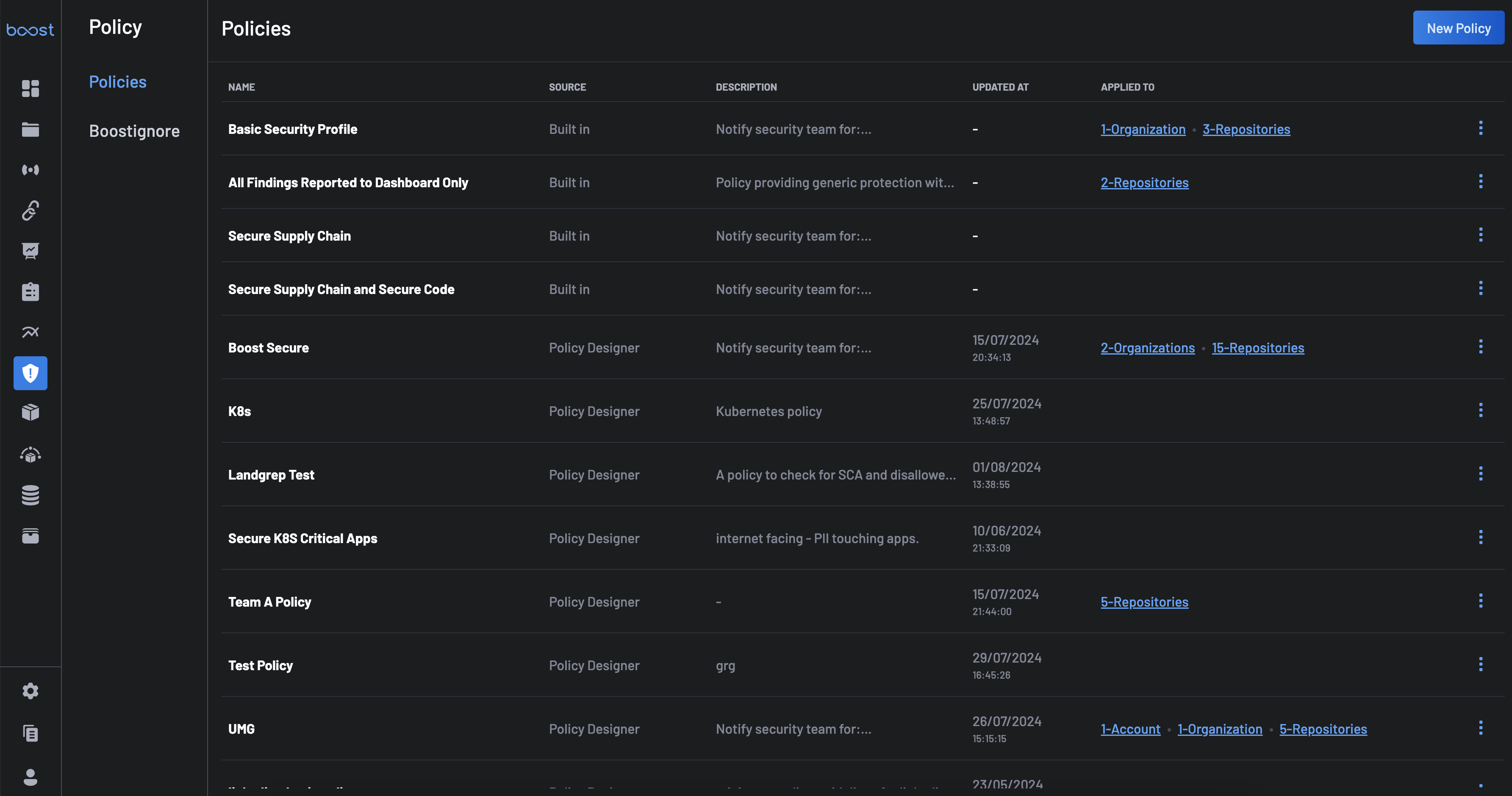
The Policy page provides a centralized view of all the security policies currently defined within Boost Security. This page allows users to manage and monitor security policies applied to various repositories and organizations.
Key Components
-
Policies Table: The main area of the page displays a table listing all the policies. Each row in the table provides the following information about a policy:
- Name: The name of the policy.
- Source: Indicates whether the policy is built-in or created using the Policy Designer.
- Description: A brief description of what the policy does.
- Updated At: The date and time when the policy was last updated.
- Applied To: Indicates the scope of the policy, showing the number of organizations and repositories it is applied to.
- Inherited By: Indicates how many other policies inherit from this policy (i.e., policies that selected this policy as their base policy). Use this to identify “parent” policies that are reused across multiple policy configurations.
-
Policy Actions: Each policy in the table has a three-dot menu on the right side. Clicking this menu provides options to view, edit, or delete the policy.
-
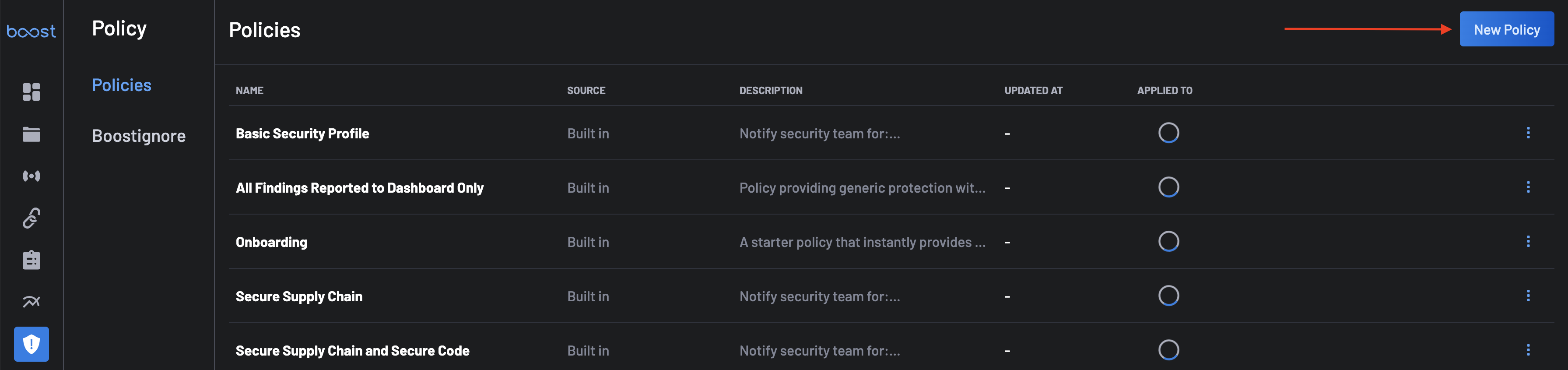
New Policy Button: Located at the top right corner of the page, this button allows users to create a new policy. Clicking this button takes users to the Policy Designer, where they can define the parameters and rules for the new policy.
Usage
-
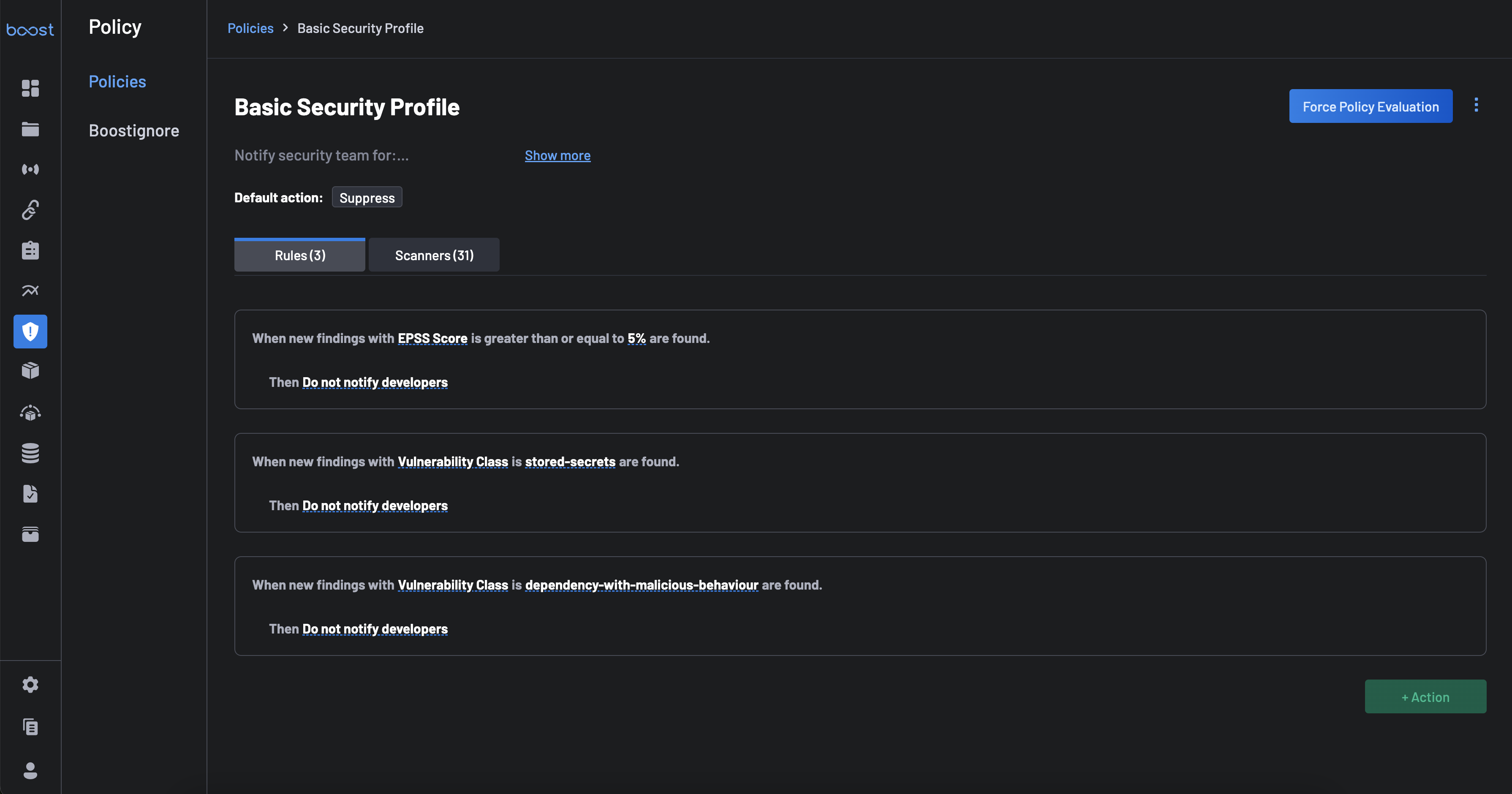
Viewing Policies & Managing Policies: Scroll through the table to audit current policies. Click on any specific policy row or the action menu to view details, edit configurations, or remove obsolete policies.
-
Creating a New Policy: Users can click the New Policy button to create a new security policy. This will open the Policy Designer, where users can specify the rules and parameters for the new policy.
-
Force Policy Evaluation: This action triggers an immediate, out-of-band re-evaluation of the most recent scan data for your resources. This updates Finding and Violation counts without waiting for a new scan event.
Important
"Force Policy Evaluation" does not modify the result sets generated based on the settings configured in the
Componentstab. It focuses only on re-evaluating policies.
Constraints to Policy Inheritance
Policy inheritance has the following limitations:
- You cannot select a built-in policy as a base policy.
- You cannot select the same policy as its own base policy.
- Inheritance is limited to one base policy (multi-level or chained inheritance is not supported).